The Legacy of Northwest Airlines: History, Hubs, and the Delta Merger
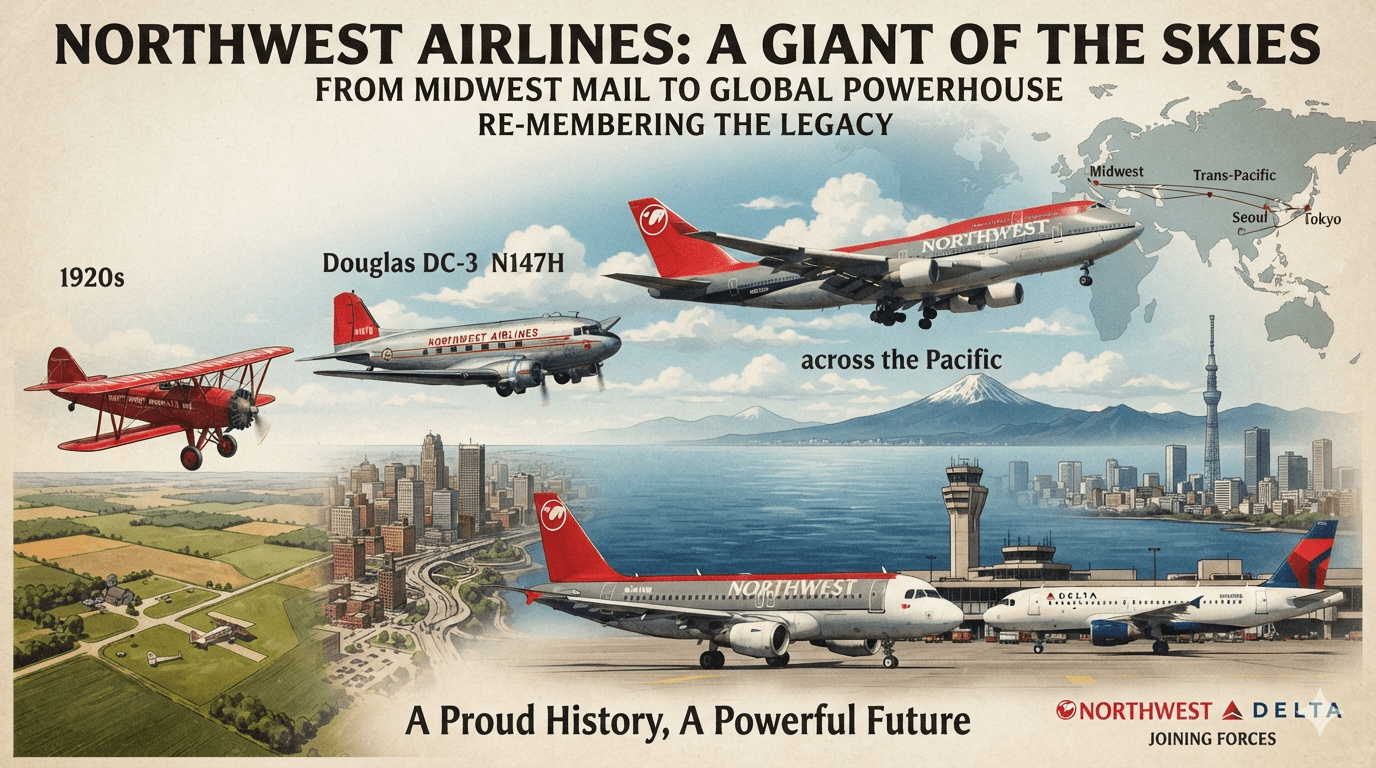
The story of commercial aviation is full of unforgettable names, but few left a mark quite like Northwest Airlines. For generations of travelers, those famous red-tailed jets meant you were heading somewhere special. Whether you were hopping between cities in the American Midwest or flying across the Pacific Ocean to Asia, this carrier was a true giant of the skies. Let’s look back at how a small regional mail carrier grew into a global aviation powerhouse before joining forces with Delta Air Lines.
The Early Days of Northwest Airways
The company first started way back in 1926 under the name Northwest Airways. Like most early flying businesses, it did not carry regular people at first. Instead, its main job was delivering sacks of mail for the United States Post Office between Minneapolis and Chicago. The pilots flew simple, open-cockpit biplanes through tough weather, paving the way for the future.
By 1927, the airline started flying its very first human passengers. A couple of years later, a group of local businessmen bought the company and pushed for bigger goals. They added routes to the Dakotas and Montana, slowly moving toward the West Coast.
Becoming Northwest Airlines
In 1934, the company changed its official name to Northwest Airlines, Inc. after a big shakeup in government mail contracts. The airline moved its main operating base to St. Paul, Minnesota, which became the true heart of its network for decades. During this time, they bought faster, modern planes like the Lockheed Orion. These new aircraft could cruise at 180 miles per hour, making travel much faster for everyone.
The company also won the rights to fly the “Northern Transcontinental Route.” This meant they could finally connect Chicago all the way to Seattle, Washington. It was a massive win that set the stage for cross-country travel.
Why the Airplane Tails Were Painted Bright Red
If you ever saw a Northwest plane, you definitely noticed the bright red paint on the tail. This look was not just for style; it was actually a vital safety feature. Before World War Two, the airline began testing flight paths through the freezing wilderness of Alaska to find a short route to Asia.
The weather up north was brutal, with heavy snow and ice covering the ground. The airline painted the tails bright red so that if a plane ever had to make an emergency landing in the snow, rescue teams could spot it quickly from the sky. The bold look became a proud trademark that lasted for the rest of the airline’s life.
The Famous Northwest Orient Era
After World War Two, the airline achieved a massive goal by launching flights to Tokyo, Seoul, Shanghai, and Manila. Because of this large new ocean-crossing network, the company rebranded itself as Northwest Orient Airlines in 1947. They were the very first airline to fly commercial passengers directly from the United States to Japan.
To help travelers remember this special connection, their advertisements featured beautiful Asian artwork and top-tier service. They even helped Japan Airlines get started in its early days by leasing out experienced flight crews and dependable aircraft.
The King of Transpacific Flights
For decades, Northwest Orient absolutely dominated travel over the Pacific Ocean. While other airlines focused mostly on flying to Europe, this carrier saw the future in Asian business and tourism. They built a massive connecting hub at Tokyo’s Narita Airport.
This smart setup allowed passengers from various American cities to fly into Tokyo, stretch their legs, and quickly hop onto another Northwest flight to their final destination in Asia. The airline became a vital bridge between Western and Eastern cultures, carrying millions of people across the sea.
Welcome to the Wide-Body Jet Age
As more people wanted to fly, the airline needed much bigger planes. In 1970, they welcomed the legendary Boeing 747, often called the “Queen of the Skies,” into their fleet. These giant, double-decker wide-body jets changed everything.
The massive size meant the airline could carry hundreds of passengers on a single flight without stopping for fuel. Northwest used these jumbo jets to anchor their popular international routes, making long journeys much more comfortable for everyday travelers.
The Massive Republic Airlines Merger of 1986
The year 1986 brought one of the biggest changes in company history. Northwest bought Republic Airlines for nearly 900 million dollars. At the time, it was the largest merger in aviation history. Overnight, the company dropped the word “Orient” from its name and went back to being just Northwest Airlines.
The merger combined Northwest’s massive international routes with Republic’s huge domestic network. It grew the workforce to over 33,000 employees and gave the airline three powerful domestic hubs: Detroit, Minneapolis, and Memphis.
A Global Partnership with KLM
In the late 1980s and early 1990s, the airline faced tough financial times due to rising fuel costs and high debts. To save the business, a group of owners bought the company, and Dutch airline KLM purchased a large stake. This move led to a historic global partnership.
Northwest and KLM built a giant joint network that allowed passengers to book a single ticket to travel almost anywhere in the world. This teamwork brought incredible financial stability and let Northwest focus heavily on its popular domestic and Pacific routes.
Leading the Industry with New Technology
Northwest was always a pioneer when it came to making travel easier and safer. In 1988, it became the very first major U.S. airline to ban smoking on all domestic flights, a rule that everyone follows today.
They also pioneered tech improvements, testing the very first seatback video screens for business class passengers. Later on, they were among the first to introduce self-service check-in kiosks at airports in 1997 and internet check-in options in 2000, changing how we board planes forever.
Financial Troubles and Chapter 11 Bankruptcy
The mid-2000s were incredibly painful for the entire airline industry. Rising labor costs, intense competition from new low-cost airlines, and soaring jet fuel prices created a perfect storm. In September 2005, Northwest was forced to file for Chapter 11 bankruptcy protection to restructure its business.
Surprisingly, they were not alone; several other major U.S. airlines were going through the exact same legal process at that time. The company spent 20 months cutting costs and shrinking its older fleet before finally emerging from bankruptcy in 2007.
The Final Flight into Delta Air Lines
In early 2008, the airline announced it would officially merge with Delta Air Lines to create the largest passenger airline in the world. Over the next two years, planes were repainted, signs were swapped, and workers joined forces under the Delta name.
On January 30, 2010, the very last official Northwest flight landed safely in Amsterdam, bringing a legendary 83-year history to an end. While the name disappeared from airport screens, its spirit lives on in Delta’s massive Midwest hubs and global routes today.
Northwest Airlines Fast Facts
| Category | Historical Details |
| Founded | September 1, 1926 (as Northwest Airways) |
| Ceased Operations | January 31, 2010 (merged into Delta Air Lines) |
| Main Domestic Hubs | Detroit (DTW), Minneapolis/St. Paul (MSP), Memphis (MEM) |
| Main International Hub | Tokyo Narita (NRT) |
| Famous Aircraft Flown | Boeing 747, Airbus A330, McDonnell Douglas DC-9 |
| Frequent Flyer Program | WorldPerks |
Frequently Asked Questions
What happened to Northwest Airlines?
The company officially merged with Delta Air Lines. The deal was announced in 2008, and the two companies completely combined their operations on January 31, 2010. All of their planes and routes became part of Delta.
Why did Northwest paint their plane tails red?
They used bright red paint so the planes could be easily spotted from the sky. This was a safety measure started in the 1930s when the airline began flying northern routes over the snowy, isolated terrain of Alaska.
What were the main hub airports for Northwest?
Their main domestic hubs were located in Minneapolis/St. Paul, Detroit, and Memphis. They also operated a massive international hub at Narita Airport in Tokyo, Japan, to handle their popular Asian flights.
What was the frequent flyer program called?
The highly popular frequent flyer program was called WorldPerks. When the two companies completed their big merger, all members had their miles safely transferred over to Delta’s SkyMiles program.
Did Northwest fly the Boeing 747 jumbo jet?
Yes, they were famous for flying the Boeing 747. They used these massive wide-body aircraft for decades to carry hundreds of passengers on long, nonstop flights across the Pacific Ocean to Asia.
Is there a museum where I can see Northwest history?
Yes, you can explore the Northwest Airlines History Center located in Minnesota. It preserves the stories, uniforms, airplane models, and photos from the airline’s long and exciting journey through aviation history.
Conclusion
Northwest Airlines may no longer fly through the clouds, but its incredible legacy will never be forgotten by aviation fans or the millions of passengers it served. From humble airmail beginnings to pioneering international travel across the Pacific, this red-tailed carrier helped shape the modern world of flight. Did you ever get the chance to fly on one of their iconic jets? Share your favorite travel memories or stories in the comments below!